The ten you need first
| Particle | What it marks | Example | English |
|---|---|---|---|
| は | the topic — “as for …” written は, said wa | 私は学生です | As for me, I’m a student |
| が | the subject, when it is new or being picked out | 雨が降っています | It’s raining |
| を | the thing the action is done to written を, said o | 水を飲みます | I drink water |
| に | a point: a time, a destination, a person receiving | 七時に起きます 友達に貸します | I get up at seven I lend it to a friend |
| で | where an action happens, or what you do it with | 家で作ります 電車で行きます | I make it at home I go by train |
| へ | direction you head in written へ, said e | 東京へ行きます | I’m heading to Tokyo |
| と | with someone; and, listing everything | 友達と遊びます | I hang out with a friend |
| も | too, also — it replaces は, が or を | 私も行きます | I’m going too |
| の | of, ’s — joins two nouns | 私の本 | my book |
| から まで | from … until … | 九時から五時まで | from nine to five |
The two choices that trip everyone up
| Choice | Use the first when… | Use the second when… |
|---|---|---|
| は or が | you are saying something about a known thing. この本は高いです — as for this book, it’s expensive. | the word itself is the news, or answers “which one?”. この本が高いです — this book is the expensive one. |
| に or で | に marks a point you arrive at or something sits at. 家にいます — I’m at home. | で marks where something happens. 家で飲みます — I drink at home. |
Fixed pairs worth memorising whole
~が好きです like — 音楽が好きです
~が分かります understand — 日本語が分かります
~をください please give me — 水をください
~に会います meet someone — 友達に会います
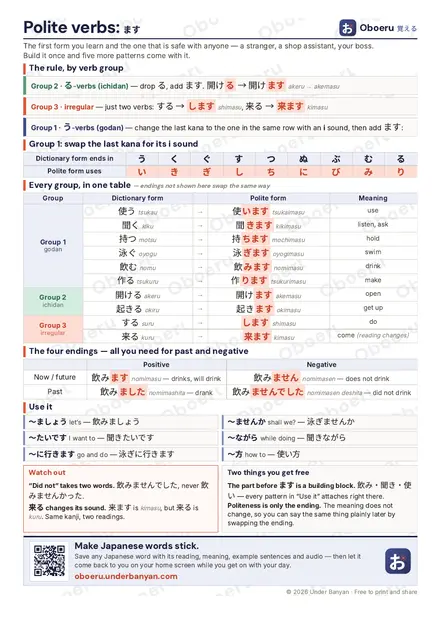
~で行きます go by — 電車で行きます
~は~が topic + detail — 私は頭が痛いです
Watch out
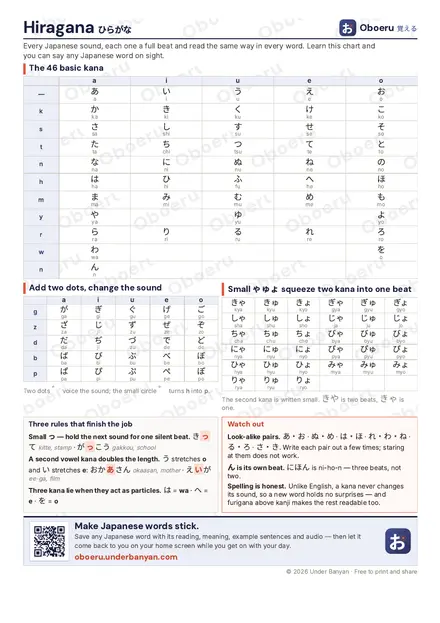
Three particles are not read as written. は = wa, へ = e, を = o — but only when they are doing a particle’s job.
Leaving through a place takes を. バスを降ります get off the bus, 家を出ます leave home.
Two things you get free
Word order relaxes. Because the particle carries the job, 水を家で飲みます and 家で水を飲みます both work. Only the verb must stay last.
Ending particles set the tone. ~ね checks you agree; ~よ tells someone something new.